




Healthy Change Dynamics: How Organizations Really Change

By Dr. Paul G. Leavenworth, the Convergence group

Change inside established organizations is rarely simple—and it’s almost never fast. Leaders often assume that if an idea is good enough, people will naturally adopt it. But real-world experience tells a different story. Healthy, lasting change depends less on the brilliance of an idea and more on how people within an organization experience, test, and eventually trust that change.


Drawing from years of working with organizations navigating cultural shifts, Dr. Paul G. Leavenworth outlines a practical framework for understanding how change actually unfolds—and why many well-intentioned change efforts stall.


The Five Groups That Shape Organizational Change


Research into change dynamics shows that people within organizations tend to fall into five general categories. Each group plays a distinct role in whether new ideas gain traction or quietly fade away.


Innovators (3–5%)

Innovators are vision-driven thinkers. They see possibilities long before others do and are often the first to articulate a new direction. Their strength lies in imagination and foresight—but on their own, they rarely create sustainable change.


Early Adopters (15–17%)

Early adopters sense potential and are willing to test ideas in real-world settings. They are action-oriented, curious, and open to piloting new approaches on a manageable scale. They bridge the gap between vision and practice.


Mid-Adopters (50–60%)

Mid-adopters are the practical core of the organization. They care deeply about what works, what’s proven, and what’s sustainable. While they tend to be cautious, they ultimately determine whether change becomes embedded into the culture.


Late Adopters and Non-Adopters (20–30%)

Late adopters need overwhelming evidence before they move, while non-adopters may never engage at all. While these groups should be understood, effective change rarely depends on convincing them first.


Why Mid-Adopters Hold the Key to Cultural Change


No organization experiences meaningful transformation without mid-adopters. While innovators and early adopters generate movement, mid-adopters act as cultural gatekeepers. They evaluate results, assess risk, and decide whether something is worth scaling.


Within this group are early, middle, and late mid-adopters. Early mid-adopters are especially important—they combine enough openness to try something new with enough credibility to influence their peers. When they engage, momentum begins to build.

Once mid-adopters are convinced that a change is beneficial and effective, adoption accelerates through official processes, systems, and communication channels. At that point, change stops feeling experimental and starts feeling normal.


How Communication Breaks Down—and How to Fix It


One of the most common reasons change fails is misaligned communication. People naturally communicate best with others who share a similar orientation toward time and risk.


Understanding Communication Orientations

  • C1 Communication: Shared perspective (future-to-future, present-to-present)
  • C2 Communication: Slightly different perspectives (future-to-present)
  • C3 Communication: Very different perspectives (future-to-past)


Innovators often struggle to communicate directly with mid-adopters because they speak different “languages.” Innovators talk in possibilities; mid-adopters talk in practicality.


Why Early Adopters Are Essential Translators

Early adopters serve as critical translators. Because they’ve tested new ideas themselves, they can speak credibly about outcomes—not just intentions. Their shared present-oriented perspective makes them far more effective at helping mid-adopters evaluate change realistically.


Creative Tension Isn’t a Problem—It’s a Signal


Healthy change creates tension. New ideas naturally pull against established systems, values, and habits. This tension often feels uncomfortable, but it’s also productive.

When managed well, creative tension forces organizations to re-examine assumptions, make room for emerging leaders, and adapt to changing external realities. Rather than avoiding tension, effective leaders learn to recognize it as a sign that meaningful cultural learning is taking place.


Over time, this process allows organizations to integrate innovation without losing stability—an essential balance for long-term effectiveness.


Change That Lasts Is Change That’s Integrated


Sustainable change doesn’t come from pushing harder or moving faster. It comes from understanding how people adopt new ideas, honoring the role each group plays, and allowing tested practices to earn trust.


Organizations that embrace these healthy change dynamics position themselves to evolve thoughtfully—adapting to new challenges while remaining grounded in what already works. This is how change stops being disruptive and starts becoming transformational.

More RESOURCES ABOUT THIS TOPIC

Courses & Trainings

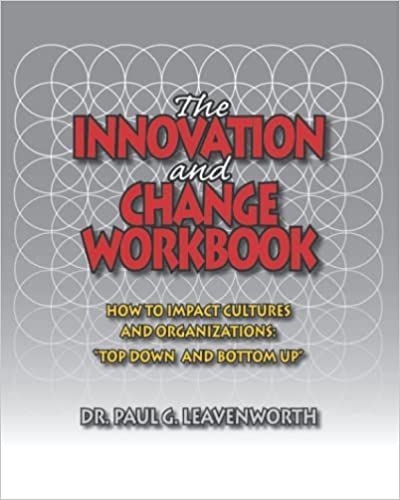
Books & Workbooks

Free Downloads


The Convergence Group logo with dark green text and gold curved lines.

The Convergence Group helps people (organizations and communities) to become better versions of themselves and more effective leaders in their spheres of influence.


+ + +

EXPLORE TOPICS:

Related Articles
February 5, 2026
In divided times, compassionate communities offer a better way forward. Discover five practices that foster trust, dignity, and meaningful connection.

Silhouette of a person standing on a beach at dusk, reflecting in the wet sand under a crescent moon.
January 22, 2026
What does it mean to lead from Scripture, not slogans? A practical look at Bible-centered leadership and why it shapes leaders who last.
Lakeside house nestled in dark forest. Dark waters and moody, overcast sky.
December 3, 2025
Discover how healthy stress can fuel creativity, growth, and Christ-centered leadership—and learn practical rhythms to avoid burnout and live with purpose.
Person silhouetted against a golden sunset, looking upwards towards the light, with mountains in the background.
December 3, 2025
Discover how God uses life transitions, conflict, crisis, and deep processing to form Christlike character and develop leaders for lifelong impact.
Person sitting on mountain peak, looking at sunrise over the mountains.
December 3, 2025
Learn how compassionate listening helps you hear beneath the surface, support meaningful change, and build healthier relationships at home, work, and in leadership.
Woman with backpack walks along a wooden path through a forest.
August 6, 2024
A practical guide to Leadership Emergence Theory for marketplace leaders seeking growth, purpose, and long-term impact grounded in Christlike character.

I'D LOVE TO HEAR FROM YOU.

Blog - Contact Form