













Finishing Well 2.0 is a free downloadable companion to Finishing Well: Establishing a Lasting Legacy. Built on the discovery-learning process—where the Holy Spirit teaches, Scripture anchors, and real life becomes the classroom—this tool helps you take intentional ownership of your growth in the later stages of life and leadership. It includes the Application and Discussion questions from each chapter, giving you space for personal reflection or small-group conversation. As you revisit and update your responses, Finishing Well 2.0 helps you clarify your purpose, role, and lasting contributions so you can live and lead in a way that positions you to finish well.

By Dr. Paul G. Leavenworth, the Convergence group
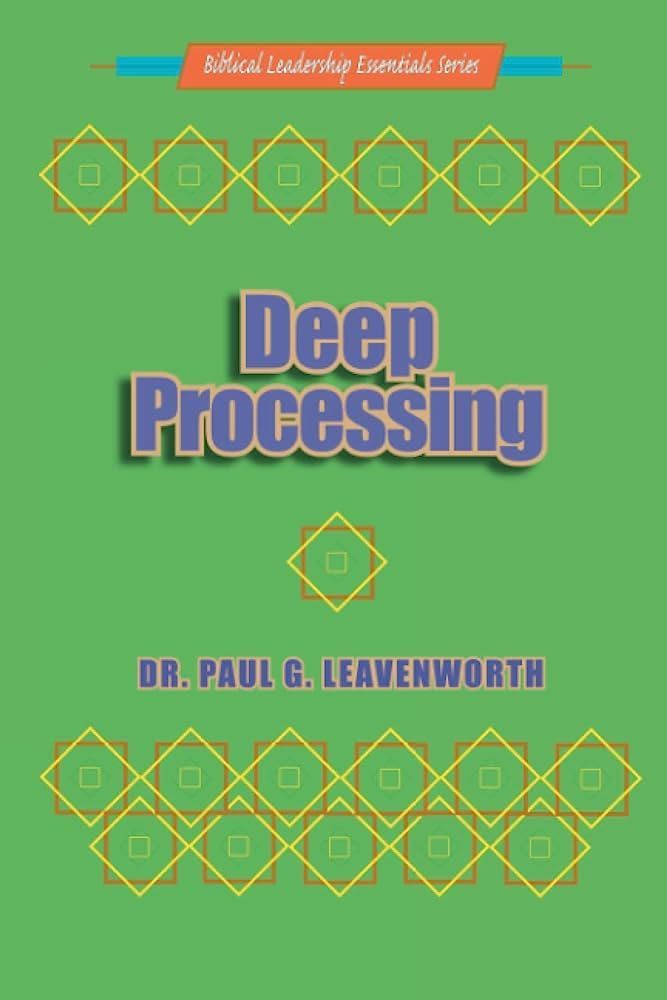
Deep Processing: How Hard Seasons Shape Better Leaders
Most people don’t grow the most during their best seasons. Growth usually comes during the moments we didn’t choose—the disruptions, pressures, losses, and long stretches of uncertainty.
Paul Leavenworth calls this deep processing: the formative work that happens when life presses on us in ways that can’t be rushed, avoided, or neatly resolved. These experiences don’t just shape what we do—they shape who we become.
Deep processing is rarely comfortable, but it is often essential for developing maturity, perspective, and long-term effectiveness in leadership and life.
What Is Deep Processing?
Deep processing refers to experiences that work beneath the surface—forming character, sharpening judgment, and expanding capacity over time. These moments are not simply obstacles to overcome; they are developmental forces that shape how a person thinks, leads, and lives.
Unlike skill training or formal education, deep processing happens in real life—through circumstances and relationships that expose limits, challenge assumptions, and demand growth.
Seven Common Deep Processing Experiences
While deep processing looks different for everyone, it often shows up in a few recurring forms.
Life Transitions
Major transitions disrupt routines and identity. Job changes, loss, retirement, aging, or shifts in responsibility force people to re-evaluate priorities and adapt to new realities.
These seasons often feel disorienting, but they can also produce clarity and renewed focus.
Crisis Moments
Crises bring intense pressure. They raise fundamental questions about meaning, purpose, and direction. During these times, people often discover what they truly depend on—and what no longer holds up. Handled well, crisis can deepen resilience rather than diminish it.
Conflict
Conflict—whether personal or professional—has a way of surfacing blind spots. It exposes communication habits, emotional triggers, and leadership instincts. While conflict is uncomfortable, it can teach discernment, humility, and creative problem-solving when engaged thoughtfully.
Leadership Backlash
Sometimes decisions that once had support meet resistance later. Backlash tests resolve, patience, and emotional intelligence. It forces leaders to confront the cost of responsibility and the complexity of influence. These moments often separate reactive leadership from mature leadership.
Isolation
Periods of isolation—intentional or imposed—can feel like setbacks. Yet distance from familiar roles often creates space for deeper reflection, recalibration, and perspective.
Isolation can refine vision and renew inner clarity.
Internal and External Pressure
Sustained opposition, internal struggle, or unseen battles can drain energy and confidence. These seasons demand endurance and awareness, often strengthening inner resolve and long-term steadiness.
Brokenness
Brokenness occurs when self-reliance finally gives way. It reshapes ambition, reorders motivations, and deepens humility.
This is often where leaders become more grounded, more empathetic, and more effective over time.
What Deep Processing Produces Over Time
When people endure deep processing rather than resist it, several long-term outcomes often emerge:
- Greater emotional and relational maturity
- Clearer priorities and a more focused life
- Increased integrity and inner consistency
- A deeper appreciation for others
- Expanded leadership capacity
- Greater resilience under pressure
- A stronger ability to finish well
Deep processing doesn’t just prepare someone for the next role—it prepares them for the long arc of life and leadership.
Why Deep Processing Can’t Be Skipped
No amount of talent, education, or opportunity can replace the formative power of lived experience. Deep processing shapes judgment, patience, and wisdom in ways that shortcuts never can.
While these seasons may feel costly in the moment, they often become the very foundation that sustains a person’s effectiveness over time.
Moving Through Deep Processing Well
Deep processing works best when people:
- Resist rushing the season
- Reflect honestly on what’s being revealed
- Stay open to learning rather than defending
- Allow perspective to develop slowly
Growth may not be immediate, but its impact is lasting.
Deep processing is rarely welcomed—but it is often necessary. The very experiences people try to escape may be the ones that shape them most deeply for the future.
The question isn’t whether deep processing will happen. The real question is whether we’ll allow it to do its work.
More RESOURCES ABOUT THIS TOPIC
Courses & Trainings

Mentorship, Coaching & Leadership Development at Grandview University
The Center for Mentoring, Coaching and Leadership Development at Grand View provides a unique opportunity to receive high-quality training in compassionate listening, mentor-coaching skills, and leadership development. Directed by Dr. Paul Leavenworth, the Center’s seminars, workshops, and certifications are developed from his decades of leadership experience and body of work and are offered through the Adult Education Department.
FINISHING WELL
End well in ministry so you can pass the baton to the next generation and live in the afterglow.
Books & Workbooks
BIBLE CENTERED LEADER SERIES
Free Downloads
The Convergence Group helps people (organizations and communities) to become better versions of themselves and more effective leaders in their spheres of influence.
+ + +
EXPLORE TOPICS: